

- Detailed Planning
- Requirement Analysis
- Design
- Coding
- Acceptance Testing
- Release
- Maintenance
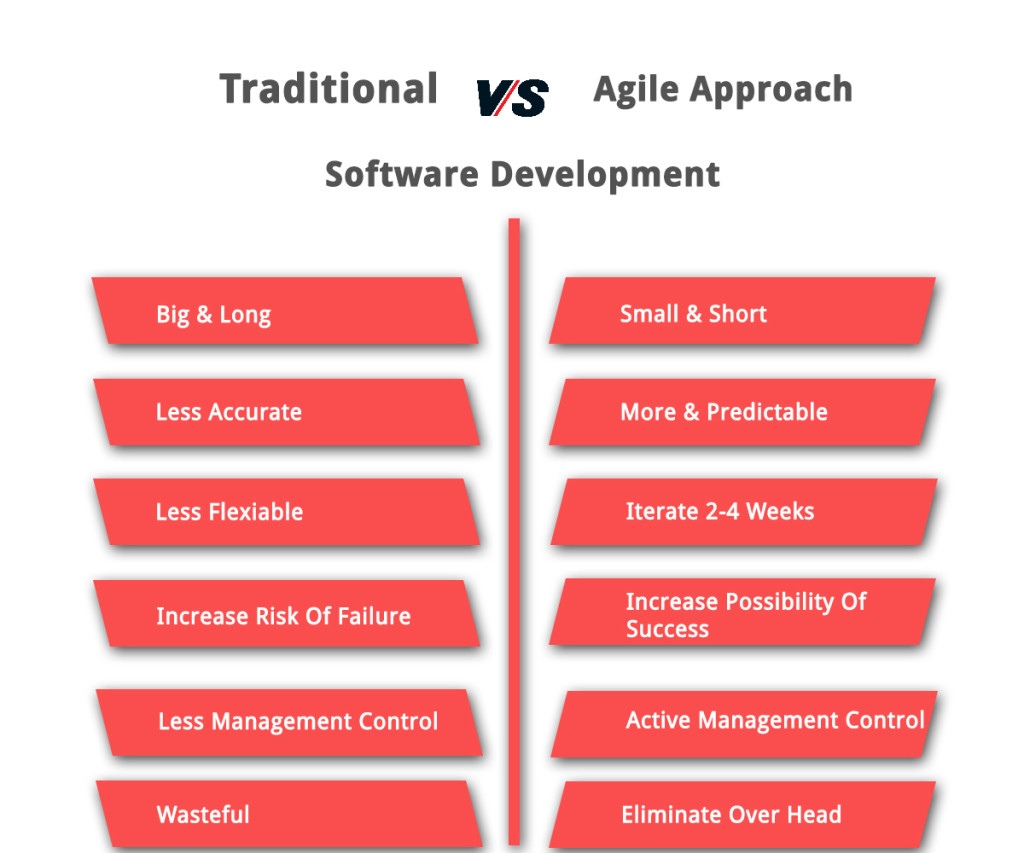 These agile framework projects have come up with certain sprints or iterations in a short period of time in which some of the pre-determined features are delivered and developed. All the projects are executed in one or more iterations and the entire product is delivered at the end of the final iteration and testing methodologies.
Agile framework methodology mostly provides high collaboration within the team, collaboration within the customers and also responds to certain changes in delivering of working software. It is very flexible and adjustable to adapt the projects with trending techniques. The project size will be usually small and the measurement of success will be high by delivering business value. The main importance is given to the people-oriented approaches with less documentation is required.
Main Advantages of using Agile Framework in Software Development Lifecycle
These agile framework projects have come up with certain sprints or iterations in a short period of time in which some of the pre-determined features are delivered and developed. All the projects are executed in one or more iterations and the entire product is delivered at the end of the final iteration and testing methodologies.
Agile framework methodology mostly provides high collaboration within the team, collaboration within the customers and also responds to certain changes in delivering of working software. It is very flexible and adjustable to adapt the projects with trending techniques. The project size will be usually small and the measurement of success will be high by delivering business value. The main importance is given to the people-oriented approaches with less documentation is required.
Main Advantages of using Agile Framework in Software Development Lifecycle
- Most Realistic approach for software development
- The best model for the environment that changes rapidly
- Delivers early partial work solutions
- Promotes teamwork and cross-training
- Functionality that can be developed rapidly and demonstrated
- Resources requirement is minimum
- Easy to manage and flexible to the developers


